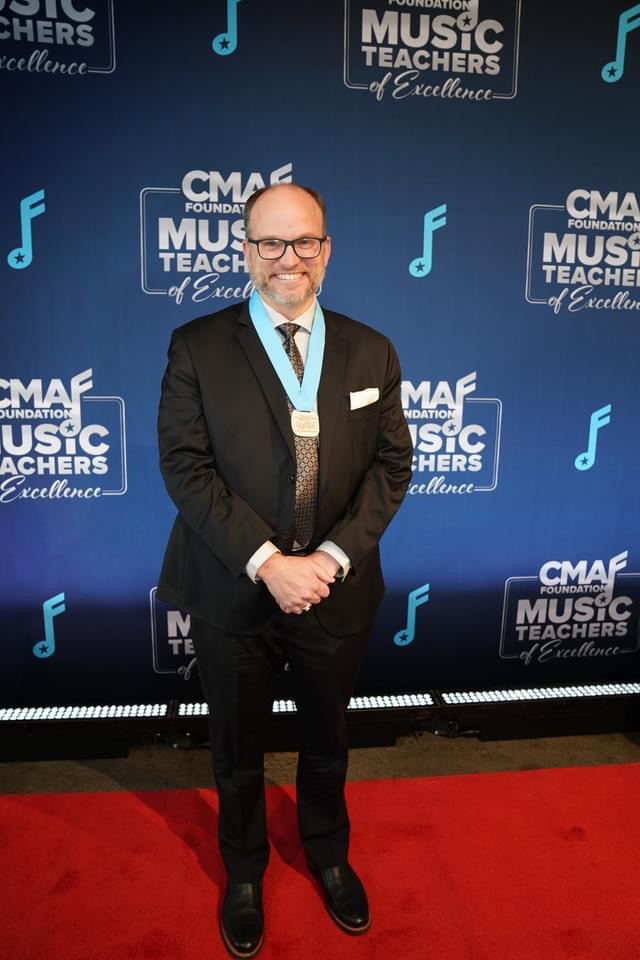
I genuinely believe that everyone can sing. I often share with my students that when I was in high school, I couldn’t even match pitch. It wasn’t until college, when I began taking voice lessons, that I learned how to connect what my hands could do on the piano to what my vocal folds could produce. That journey taught me that singing is not an innate gift reserved for a few—it’s a skill that can be nurtured and developed with time, patience, and encouragement.
Unfortunately, in today’s culture—where comment sections and social media “likes” often define a person’s sense of worth—many people feel uncomfortable or even fearful to sing. The vulnerability of using one’s own voice can feel intimidating. One of my greatest goals, therefore, is not just to build a choir program at James Lawson High School, but to cultivate a singing community. I want every student, whether they consider themselves “a singer” or not, to feel that their voice has value.
To make this vision a reality, I try to integrate singing into the broader school culture. I invite the entire student body to sing the Alma Mater at pep rallies, I organize audience sing-alongs at concerts, and I make it a point to sing with random students in the hallways. These small, spontaneous musical moments help normalize singing as something joyful and communal rather than intimidating or performative.
I also firmly believe that everyone should sing. There’s something profoundly human about using your own body as your instrument. Singing fosters connection—both inwardly and outwardly. When you sing in a group, especially with people you might not know well, you share in a deeply communal experience. Together, you breathe, listen, and create something that none of you could achieve alone.
Choral singing also provides unique opportunities for growth. It invites students to explore unfamiliar languages and cultures through music, to wrestle with challenging texts and harmonies, and to learn the beauty of delayed gratification—of working hard on something until it finally clicks.
Very rarely do I meet someone who truly dislikes music. What surprises me most is how much joy students can find in the simplest songs—like singing a basic round—and how deeply they can connect with complex, multi-layered works once they gain confidence. Every student, in my view, deserves the chance to experience this full spectrum of music-making during their time in high school.
Because ultimately, singing isn’t just about making music—it’s about finding your voice, discovering community, and learning that you have something meaningful to contribute to the world around you.


 Tyler Merideth